

The fiscal year marked the first full year of Prime Minister Shehbaz Sharif’s administration.
ISLAMABAD: Every Pakistani now carries a debt burden of Rs333,000, a 13 percent rise from last year, according to the Fiscal Policy Statement presented to Parliament. The Ministry of Finance linked the surge to higher interest payments and fresh borrowing that pushed public debt beyond statutory limits.
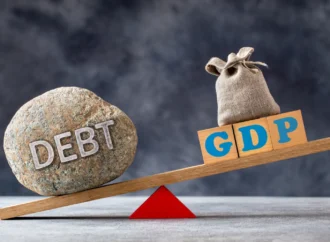
The report showed that per capita debt increased from Rs294,098 to Rs333,041 in one year, adding Rs39,000 to the load. Pakistan’s total public debt rose from Rs71.2 trillion in June 2024 to Rs80.5 trillion in June 2025. Debt as a share of GDP also grew, climbing from 67.6 percent to 70.7 percent.
The ministry admitted that public debt dynamics remained a pressing challenge, with exchange rate swings and rising interest costs driving the increase. Unlike the United States, where breaching debt ceilings halts government operations until Congress acts, Pakistan’s Parliament only receives information on such breaches without consequences for the federal government.
The fiscal year marked the first full year of Prime Minister Shehbaz Sharif’s administration. Despite promises of austerity, the report noted that new departments were created, the cabinet expanded, and spending on furniture and vehicles continued.
The statement confirmed that the federal government overshot the fiscal deficit limit set under the Fiscal Responsibility and Debt Limitation Act. Against a ceiling of 3.5 percent of GDP, the deficit reached 6.2 percent, overshooting by Rs3.1 trillion.
Revenue collection stood at Rs11.7 trillion, or 90.5 percent of the Rs13 trillion target. Non-tax revenues performed better, reaching Rs5.1 trillion, driven by central bank profits and petroleum levy receipts.
On the expenditure side, current spending was budgeted at Rs17.2 trillion but came in lower at Rs15.8 trillion. Development spending fell short at Rs1.4 trillion against a Rs1.7 trillion allocation. Defence spending exceeded its budget, reaching Rs2.2 trillion compared to Rs2.1 trillion. Interest payments totalled Rs8.8 trillion, below the Rs9.8 trillion allocation. Subsidies cost Rs1.3 trillion, while pensions stood at Rs911 billion.
The ministry outlined a medium-term debt management strategy that aims to reduce financing needs, extend maturity profiles, and diversify instruments to strengthen sustainability.
This rising debt burden highlights the struggle to balance fiscal discipline with growing expenditure demands, leaving Pakistan’s economy exposed to future shocks.















Leave a Comment
Your email address will not be published. Required fields are marked with *