
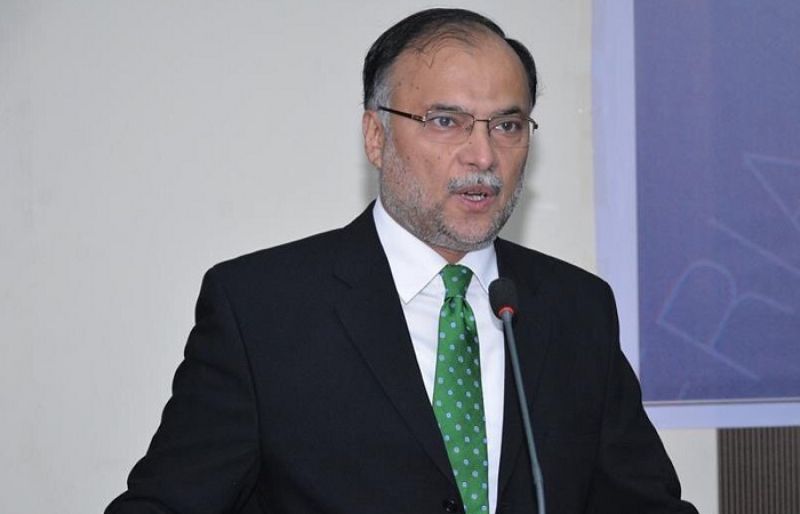
Addressing the National Assembly, Iqbal reaffirmed Pakistan’s firm stance on Israel.
Islamabad: Planning Minister Ahsan Iqbal on Friday defended Pakistan’s decision to join Donald Trump’s newly created Board of Peace, saying the move reflects Pakistan’s commitment to supporting peace efforts in Gaza and across the Muslim world.
Pakistan accepted the invitation to join the forum a day earlier, though the Foreign Office has yet to disclose details about its structure or working methods. Officials have suggested the board will focus on facilitating ceasefire arrangements, humanitarian aid, and reconstruction in Gaza, while aligning with broader UN-led political efforts.
Addressing the National Assembly, Iqbal reaffirmed Pakistan’s firm stance on Israel. “Israel is a brutal country, and there is no change in this principled stance,” he said. He recalled Pakistan’s past decisions taken under global pressure, including nuclear tests, as proof of the country’s independence and sovereignty.
Iqbal argued that joining the Board of Peace prevents Pakistan from being isolated. “If Pakistan had not participated, they would have said Pakistan stood alone,” he remarked, adding that the country now stands alongside Saudi Arabia, Turkey, Qatar, and the UAE in efforts to support Palestinians.
His remarks came after JUI-F chief Maulana Fazlur Rehman criticised the government for joining the board without consulting Parliament or the cabinet. Rehman accused the government of bowing to external influence and reminded lawmakers of Quaid-e-Azam Muhammad Ali Jinnah’s position on Israel as an “illegitimate state.”
The Pakistan Tehreek-e-Insaf (PTI) also rejected the decision, saying it carried international significance and should have been taken with transparency and broad political consultation. In a statement, PTI stressed that such matters must involve all major stakeholders.
Leader of the Opposition in the Senate, Allama Raja Nasir Abbas, went further, calling the initiative the “Occupation Board” and questioning the absence of Palestinian representation.
Despite the criticism, Iqbal insisted Pakistan’s participation is a diplomatic success. “We do not need lessons from anyone on Pakistan’s security. If Pakistan has centre stage today, it is a diplomatic success,” he said.













Leave a Comment
Your email address will not be published. Required fields are marked with *